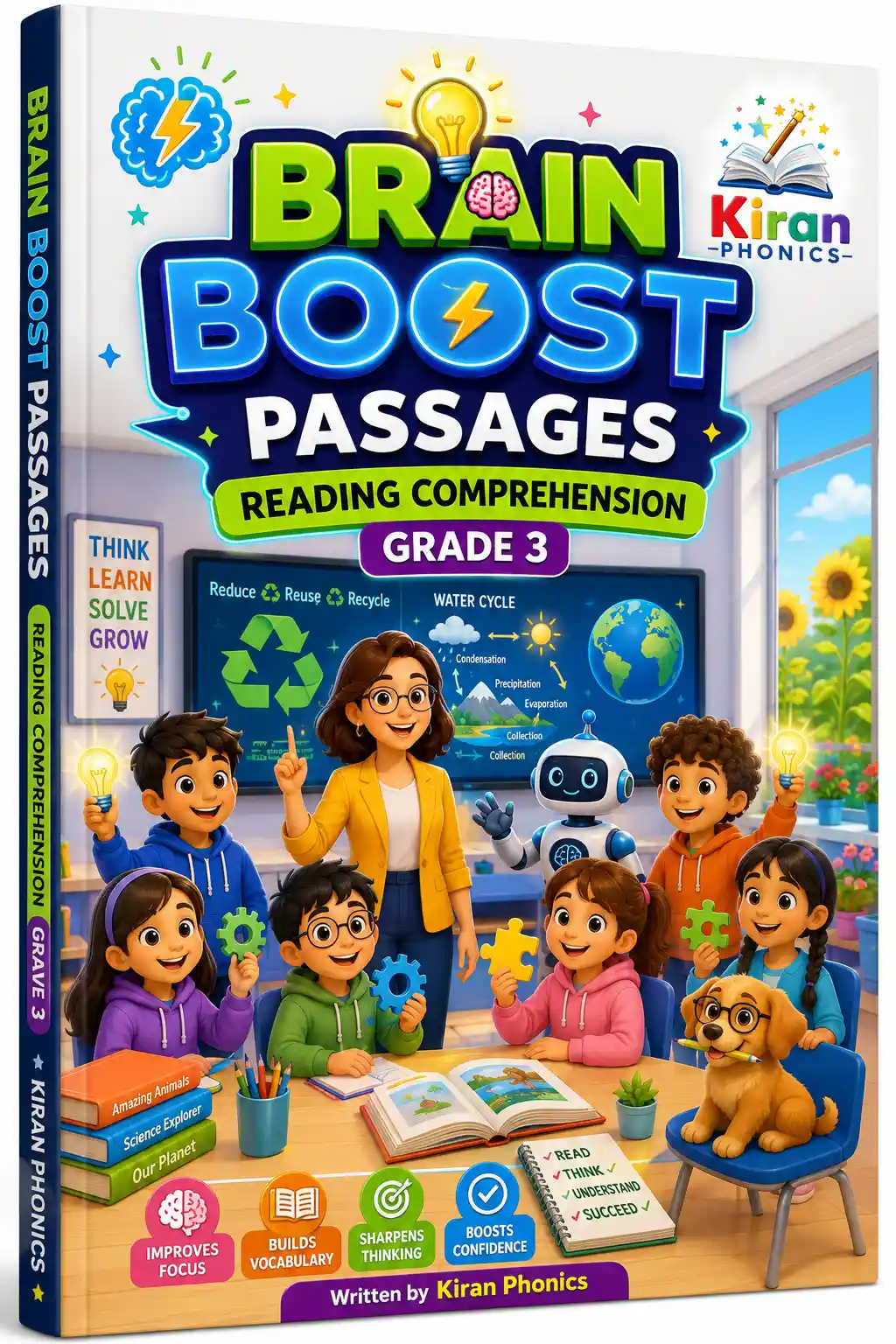
Brain Boost Passages Reading Comprehension (Grade 3) – Strengthen Reading, Thinking, and Understanding
Brain Boost Passages Reading Comprehension (Grade 3) is a useful learning resource for third-grade students who are ready to develop stronger reading comprehension, vocabulary, fluency, and critical-thinking skills. At Grade 3, children are increasingly expected to understand information independently, identify important ideas, make predictions, and explain their answers using evidence from a text.
Why Reading Comprehension Matters in Grade 3
Reading comprehension is an essential part of academic success. Children need to understand stories, informational texts, instructions, and questions across different subjects.
Brain Boost Passages Reading Comprehension (Grade 3) can provide structured opportunities for students to read age-appropriate passages and practice understanding what they read. Regular practice can help children become more confident and independent readers.
Improve Reading Fluency
Fluency allows students to read accurately, smoothly, and with appropriate expression. When children read passages regularly, they become more familiar with sentence patterns and vocabulary.
Encourage students to read a passage aloud and then reread it silently. Repeated reading can help improve accuracy and make reading feel more natural.
Develop Vocabulary Skills
Grade 3 reading materials often introduce more advanced vocabulary. Instead of simply memorizing unfamiliar words, students can learn their meanings from context.
Ask children to identify new words, predict their meanings, check the surrounding sentences, and then use each word in an original sentence. This method connects vocabulary learning with practical reading.
Strengthen Main Idea and Details
A strong reader should be able to identify what a passage is mainly about and recognize the details that support the central idea.
The Brain Boost Passages Reading Comprehension (Grade 3) approach can help students practice finding key information, identifying important events, comparing ideas, and summarizing passages in their own words.
Build Critical-Thinking Skills
Grade 3 students can begin moving beyond simple recall questions. Encourage them to make inferences, predict outcomes, identify cause and effect, and explain why a character behaves in a certain way.
Questions such as “What evidence supports your answer?” can teach children to look closely at the text and develop logical responses.
Create a Consistent Reading Routine
A simple 15–20-minute daily routine can make reading practice manageable. Students can read one passage, highlight important information, answer comprehension questions, and finish by writing a short summary.
Parents and teachers can discuss the passage afterward to encourage children to explain their thinking and connect the text to their own experiences.
Final Thoughts
Brain Boost Passages Reading Comprehension (Grade 3) can be a valuable addition to a third-grade literacy routine. By combining passage reading with vocabulary development, comprehension questions, summarizing, and critical thinking, students can strengthen the skills they need for more advanced reading.
With regular practice and positive guidance, Grade 3 learners can become confident readers who understand information, think critically, and communicate their ideas clearly.